
By Joseph Bryson December 12, 2025
Manual credit checks may seem so familiar; however, they bear hidden costs that will slow down business growth. Manual reviews of applications take a great deal of time, raise error risks, and also bring inconsistency in decisions. These delays and errors can frustrate customers, raise operational expenses, and even lead to lost sales. All of these challenges show why companies are moving toward automated credit solutions.
Credit Checks for Reducing Business Risk
Checking into one’s customer’s credit would help the business protect its cash flow, reduce risks, and deal confidently with new clients. In times when late payments and financial instability are common, understanding a customer’s credit history gives you a more realistic picture of their reliability. You will have a much better idea of what kind of history they have when it comes to past payment habits, financial stability, and overall credit behaviours, allowing you to make wiser decisions before extending credit or entering long-term agreements.
Credit checks also help to mitigate financial risk by indicating the likelihood of a customer to pay on time. If their history reveals late payments or patterns of missed bills, you can take precautions early, adjust terms, or choose not to extend credit. In this way, you avoid losses and keep your enterprise stable. Credit checks facilitate timely payments because, through them, you will be able to choose customers with a proven record of paying according to schedule. Once you work with reliable clients, your cash flow becomes more predictable.
They will also add a layer of fraud protection. Having anti-money laundering checks in credit reports helps to establish unusual or suspicious financial activity, reducing fraud and following all appropriate regulations. Credit check tools will make the process of customer onboarding simpler. This automation of verification steps saves businesses so much time, reduces manual work, and makes the process quicker for new customers.
More importantly, credit checks provide you with more information to make informed decisions. With a clear glimpse into a customer’s financial health, you are able to set appropriate credit limits, create suitable terms of payment, and establish healthier financial relationships. This not only reduces risk but also supports better planning and steady growth.
Who Should Do the Customer Credit Checks?

Running customer credit checks can help a wide range of different business types, especially those relying on timely payments and good cash flow. Credit checks are targeted at understanding whether a customer is financially reliable before extending credit, delivering services, or entering long-term agreements. Firstly, for small businesses, this can be extremely important because one single late payment could affect day-to-day operations. It would therefore be very useful for small business owners to know how to review a customer’s credit history in order to avoid unnecessary risks and make safer decisions.
Secondly, B2B companies also depend on credit checks in one way or another since they usually extend a line of credit to clients. Knowing the client’s creditworthiness helps to avoid late payments and secures one’s working capital. Service-based businesses, agencies, consultants, and freelancers operate in a timely manner to schedule other projects and ongoing work. A check on their client’s financial background will help them steer clear of any projects that can be unpaid later on.
Thirdly, credit checks help retailers and e-commerce brands that provide installment plans or buy-now-pay-later options to decrease the odds of customers defaulting. Credit checks are also a natural part of the lending process of financial institutions, which want to make sure they approve loans only to those who can pay back. Next, we have renting and leasing companies, which also benefit from this, as credit checks help them evaluate whether a renter will make payments on time and take good care of the property or equipment they are renting.
Additionally, wholesale businesses, as well as distributors, sometimes extend credit to retailers or other business entities; understanding a buyer’s financial dependability will be crucial in preventing losses. Although the necessity for a credit check may be different from one industry to another and also with respect to the different business models, any company that extends credit, delayed payments, or long-term services can enjoy valuable protection and clarity from the process.
Credit Risk Red Flags

Identification of Credit Risk Signals is the necessary condition to defend from probable fraud in the process of considering a customer’s creditworthiness.
Firstly, one of the most relevant signals of trouble is declining profitability. Businesses that have never had much profit or profits that have fallen are fundamentally more dangerous than those businesses consistently earning or showing an increase in profitability.
Secondly, when the cash available is not enough to pay off short-term indebtedness, or when the business is burdened by too many suppliers who sell on extended credit terms, it can be far from meeting the required obligations.
Preparing Credit Score for Loans and Credit Applications

Understanding your credit score is merely a step in the process of attaining perfect financial health. Credit score improvement requires continuous effort over time. Knowing your number is just not enough; you have to manage your credit actively if you are looking forward to its best results.
Start by paying all bills on time, this includes credit cards, utilities, rent, and loans, to avoid those late marks that dent your credit score. Try keeping your utilization of credit as low as possible, preferably below 30 percent of your limit, to easily pay back and keep your credit score healthy. You can review your credit report from major bureaus to identify errors or outdated information and dispute errors.
Also, avoid opening new credit accounts unless required. Every time a new credit application is generated, a hard inquiry is triggered, which tends to shrink your credit score at times. Follow these steps properly to build up your credit, stay on top of your finances, and be better prepared for a credit check.
The Hidden Costs of Manual Credit Checks and How They Impact Your Growth

While relying on manual credit checks can be the most comfortable and familiar way to review applicants, it tends to have hidden costs that quietly slow down your business. Firstly, there is an issue of time. Document reviews, income verification, and credit detail checks can take hours in a single application. If there are dozens or hundreds of files, your entire approval process crawls at a snail’s pace.
Customers waiting for decisions often get tired and move on to your competitor, who will give them faster answers. This directly translates into lost sales and missed revenue.
There’s also a greater possibility of human error in manual processes. Small, minute-to-minute details can easily get skipped, even by experts. Calculation or missing documents can get overlooked when numerous files are considered in a busy workday. Such mistakes generally result in faulty approvals, compliance issues, or unnecessary rejections. These take a little more time to get sorted out and lengthen the process, hence increasing operational costs. In time, it affects not just accuracy but also customer trust.
Another big challenge is inconsistency. When every underwriter has their own way of reviewing data, the outcomes have different consistency from one application to another, because of this, it becomes more difficult to monitor standards, performance, or compliance.
The costs also start to mount up pretty quickly. As your business scales, manual credit checks scale with the number of employees that need to be brought on board to handle the growth in volumes of work. These added salaries, training sessions, and overheads cut into profit and make scaling much more costly than it needs to be. Instead of supporting growth, manual processes become a barrier to business operations.
Finally, when loan volume surges, your team struggles to keep up. Productivity drops, delays increase, and bottlenecks form at every stage. Limitations are set on your ability to expand or serve more customers, or take on new opportunities. In the long run, slower workflows, inconsistent decisions, and increasing labor costs mean lost sales and slower business growth.
Why Automated Underwriting Is the Upgrade Your Business Needs
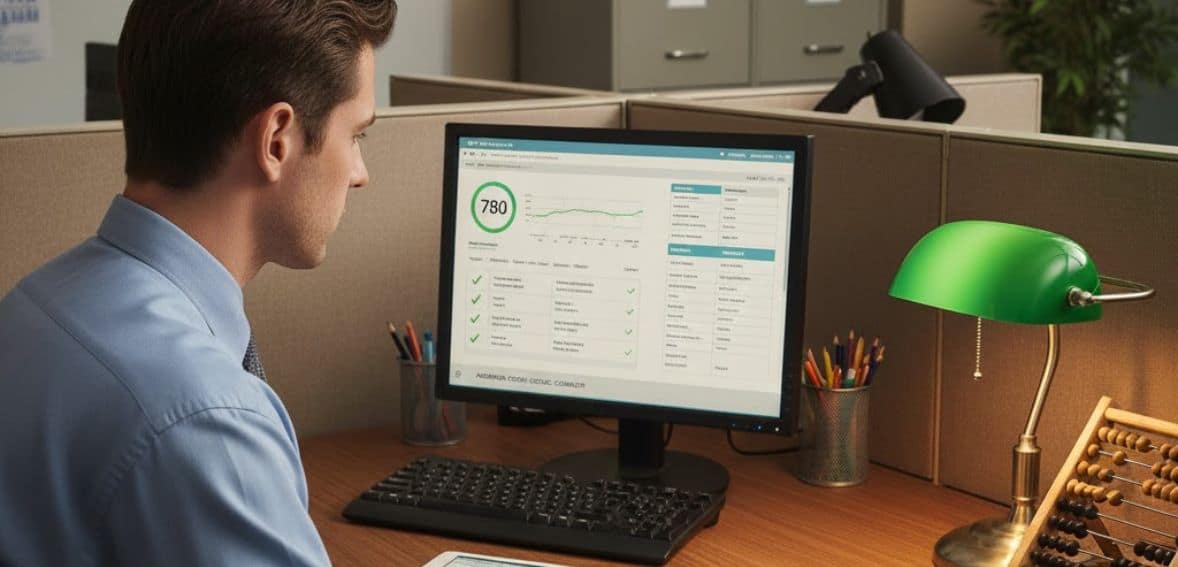
Automation makes the credit check process faster, cleaner, and far more reliable by automating many steps that generally slow down teams. It begins with information collection from sources such as credit bureaus, past transactions, and digital footprints, which can even include public online activity.
This provides the lender with a complete view of the borrower’s financial behavior. The system cleanses the data for errors, duplication, and anything irrelevant, so that only accurate information is considered.
Next, AI tools pinpoint the factors that really influence creditworthiness, such as spending habits, repayment patterns, and payment history. With these variables in place, the machine learning models analyze past trends and borrower behavior to estimate the level of risk for each applicant.
Once the risk model is built, the platform applies your pre-set credit rules, such as credit score limits, debt-to-income ratios, and requirements on payment history, and gives you a clear decision in real time.
If an application crosses a risk threshold, it can be sent to a human underwriter for a closer look. Over time, the system keeps learning from outcomes like timely payments, missed deadlines, or defaults, and will independently refresh its credit-scoring model. This will help the lender make better and more consistent decisions as they grow.
Modern Technologies Transforming the Credit Check Process
Modern technologies are making the processes of credit checking more reliable by changing how a lender performs checks. Firstly, machine learning enables the system to learn from past data to spot patterns in financial behavior that mark an individual’s creditworthiness.
Secondly, Intelligent Document Processing uses sophisticated OCR to read documents just like humans, picking up both text and context to speed up the verification process. Thirdly, natural language processing then takes this a step further by analysing unstructured information, such as emails, chats, and public social posts, for hidden signals of risk.
Next, we have big data analytics, which makes it possible to analyze enormous amounts of both financial and non-financial data all at once, which is particularly powerful for people who don’t have a long history of borrowing credit.
Additionally, blockchain adds trust and visibility through the keeping of credit records in secure storage. Finally, cloud computing holds it all together. Through its rapid pace, storage capacity, and scalability, cloud computing is crucial for enabling lenders to make real-time decisions on credit anywhere.
Is Automation Right for Your Business?
Lenders are often concerned that moving to automation is going to result in less control over credit decisions, however the reality is quite the opposite. With modern credit check tools, you can customize your own rules, build and review patterns, and determine exactly how each application should be handled.
However, the real benefit lies in how automation removes painfully slow reviews, human errors, increases labor costs, and frustrates borrowers.
But before making such a shift, it is important to know if your business is ready. Firstly, begin by looking at your daily operations:
- Are you having problems keeping up with an increasing number of applications?
- Are manual credit checks delaying approvals and dropping off customers?
- Have human mistakes ever exposed you to compliance issues or approved high-risk borrowers?
- Is your team already at maximum capacity or too expensive to scale?
- Or are new regulations and audit demands piling up a bit difficult to keep track of anymore?
- More importantly, are your borrowers expecting more speed and transparency in credit decisions than you are capable of delivering?
Your technology setup may also come into play; if you have lending software or CRM tools in use, then you’re closer to automation than you may think. Your honest answers will determine if automation best serves as the next step for your lending business.
AI In Future Credit Checks
In the future, credit checks will move towards smarter, more personalized, and more transparent systems. AI will enable lenders to understand each borrower at a deeper level by studying real patterns in how people spend, save, and manage money. This makes it possible to offer credit products that fit the needs of the individual far more closely than was previously possible.
Predictive analytics will also become much stronger. As AI continues to learn from new data and market trends, lenders can make much more accurate risk predictions even during unstable economic times. These trends aim to reduce the biases from automated decisions and treat every applicant fairly, regardless of background.
We might also find a higher degree of cooperation among financial institutions. Shared AI networks, for example, enable banks to share insights in refining risk assessment models and building a more accurate industry-wide view of creditworthiness. The result would be a safer, sounder, and more efficient system for all participants.
Conclusion
These ‘hidden’ costs of manual credit checks include longer processing times, more errors, and lost sales-opportunistically, which eventually affect the growth and profitability of a business. Moving to automated credit solutions will make workflows more efficient, accurate, and improve the customer experience, enabling scalability of businesses, smarter decisions, and revenue protection while remaining competitive in today’s fast-paced market.
FAQs
What is a manual credit check?
A manual credit check involves reviewing a customer’s credit history manually; this often uses paper documents and spreadsheets.
Why are manual credit checks expensive?
They are time-consuming, induce the risk of errors, and can consequently cause delays that upset the customers and decrease sales.
How does automation increase credit checks?
Automation accelerates approval processes, minimizes errors, ensures decisions are made with consistency, and handles volumes at higher scales efficiently.
Can manual credit checks impact customer experience?
Yes, slower processing and errors frustrate customers and make them less likely to work with you.
Can automation be applied to any business?
Most businesses dealing with several credit applications or large volumes benefit from automation to enhance efficiency and accuracy.